Easy Miso Soup Recipe- Quick & Delicious Comfort Food
Miso soup recipe: the comforting embrace of Japanese cuisine, right in your own kitchen. There’s something undeniably soothing about a warm bowl of miso soup, a culinary hug that instantly transports you. Perhaps it’s the savory depth of the fermented soybean paste, the whisper of umami that dances on your tongue, or the delicate dance of tofu and seaweed. Whatever the magic, this humble soup has captured hearts worldwide for its incredible flavor and its surprisingly simple preparation. What truly makes this miso soup recipe special is its versatility; it’s a blank canvas for your favorite additions, from tender mushrooms to vibrant greens. It’s the perfect starter, a light lunch, or a satisfying accompaniment, proving that sometimes, the most profound flavors come from the simplest ingredients.
Miso Soup Recipe
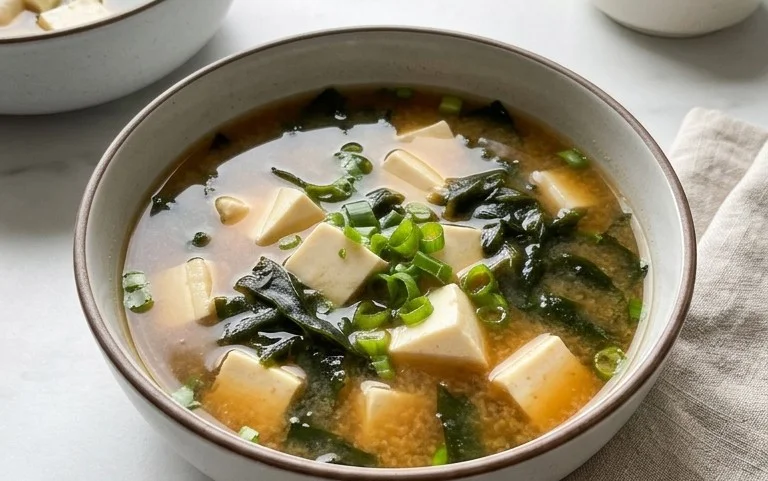
Miso soup is a cornerstone of Japanese cuisine, a comforting and flavorful broth that’s both simple to make and incredibly versatile. It’s the perfect starter to any meal, a warming embrace on a chilly evening, or even a light lunch on its own. The beauty of miso soup lies in its depth of flavor derived from just a few key ingredients, chief among them being dashi and miso paste.
Dashi, the foundational broth, provides an umami-rich base that’s subtly savory. Miso paste, a fermented soybean paste, then adds its characteristic salty, earthy, and sometimes sweet notes, depending on the type used. Silken tofu offers a delicate, creamy texture, while dried seaweed rehydrates to add a whisper of the ocean and a hint of chew. Finally, fresh scallions bring a bright, pungent finish.
While many people buy pre-made miso soup mixes, the difference in taste and freshness when you make it from scratch is truly remarkable. It’s surprisingly quick to prepare, making it an ideal recipe for busy weeknights. I often whip up a pot of miso soup when I’m craving something nourishing and satisfying without a lot of fuss. Let’s dive into how you can create this simple yet profound dish in your own kitchen.
Ingredients:
Preparing Your Miso Soup
The process of making miso soup is straightforward, focusing on gently heating and combining the ingredients to preserve their delicate flavors and textures. We want to avoid boiling the miso paste, as this can diminish its complex taste and beneficial probiotics.
Step 1: Rehydrating the Seaweed
Begin extract by preparing your dried seaweed. Many types of dried seaweed, like wakame, are quite brittle when dry. To rehydrate them, place the dried seaweed in a small bowl and cover it with cool water. Let it sit for about 5 to 10 minutes, or until it becomes tender and unfurls. You’ll notice it expands significantly. Once rehydrated, drain the seaweed thoroughly and gently squeeze out any excess water. If the pieces are very large, you can give them a rough chop to make them more manageable to eat in the soup. This simple step is crucial for achieving the right texture in your finished miso soup.
Step 2: Warming the Dashi
Pour your 2½ cups of dashi into a medium saucepan. Place the saucepan over medium heat and bring the dashi to a gentle simmer. You don’t need a rolling boil, just a light simmer to ensure it’s hot enough to dissolve the miso paste. It’s important to start with a good quality dashi, whether you’ve made it from scratch using kombu and katsuobushi, or used a good quality instant dashi powder. The dashi is the foundation of your soup’s flavor, so take a moment to appreciate its subtle aroma as it heats up.
Step 3: Adding the Tofu and Seaweed
Once your dashi is simmering gently, carefully add the silken tofu pieces. Be gentle as you introduce them to the pot, as silken tofu can break apart easily. We’re just warming the tofu through, not cooking it extensively. Next, add the rehydrated and drained seaweed to the pot. Stir gently to distribute the tofu and seaweed evenly within the dashi. Let these ingredients simmer for another 2 to 3 minutes, allowing them to absorb the flavors of the warming dashi. This also ensures the tofu is heated through.
Step 4: Dissolving the Miso Paste
This is perhaps the most important step in achieving a perfect miso soup. In a separate small bowl, scoop out your 2 to 2½ tablespoons of miso paste. Add a ladleful of the warm dashi from the saucepan into the bowl with the miso paste. Using a whisk or a fork, stir the miso paste vigorously into the warm dashi until it is completely dissolved and forms a smooth slurry. This technique of pre-dissolving the miso paste in a small amount of liquid ensures that it disperses evenly throughout the soup without clumping, and also helps to protect its delicate flavor and beneficial properties. It’s better to start with 2 tablespoons of miso paste and add more if you desire a stronger flavor, as miso can vary in saltiness and intensity.
Step 5: Incorporating the Miso and Finishing
Once the miso paste is fully dissolved into the slurry, carefully pour this mixture back into the saucepan with the dashi, tofu, and seaweed. Stir gently to combine everything. At this point, reduce the heat to low. It is crucial to avoid boiling the soup after the miso paste has been added. Boiling can destroy the nuanced flavors of the miso and can also kill off beneficial bacteria. Gently heat the soup just until it is steaming hot, but not boiling. Stir in most of your chopped scallions, reserving a few for garnish. The gentle heat will wilt the scallions slightly and release their fresh aroma into the soup.
Serve immediately in small bowls. Garnish with the reserved chopped scallions for an extra burst of fresh flavor and color. Enjoy this comforting bowl of homemade miso soup!
Conclusion:
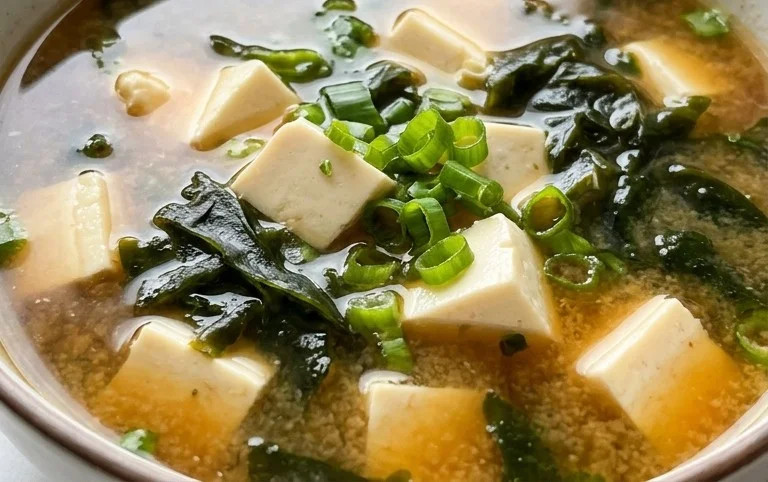
So there you have it – a simple yet deeply satisfying miso soup recipe that’s incredibly versatile and quick to prepare. This recipe is fantastic because it offers a comforting, umami-rich base that’s perfect for a light starter, a nourishing lunch, or even a late-night snack. The beauty of this miso soup lies in its adaptability. Feel free to customize it to your heart’s content! Think about adding silken tofu for extra protein, or perhaps some shiitake mushrooms for a deeper earthy flavor. Edamame offers a lovely pop of color and texture, while a sprinkle of fresh chives or scallions adds a bright, fresh finish. Don’t be afraid to experiment! I truly encourage you to give this recipe a try. It’s a wonderful way to bring a taste of Japan into your kitchen and enjoy a healthy, delicious meal in minutes.
Frequently Asked Questions about Miso Soup:
What kind of miso paste should I use?
You can use a variety of miso pastes depending on your preference. White miso (shiro miso) is mild and slightly sweet, making it a great choice for begin extractners. Red miso (aka miso) is more robust and savory. Awase miso is a blend of red and white, offering a balanced flavor. Any of these will work wonderfully in this miso soup recipe.
Can I make miso soup ahead of time?
While you can prepare some components of the miso soup ahead of time, it’s best to add the miso paste and delicate ingredients like tofu and scallions just before serving. Miso paste can lose some of its beneficial probiotics and flavor if boiled excessively. Store the dashi broth separately in the refrigerator for up to 3 days.
Miso Soup Recipe
A simple and comforting classic Japanese miso soup with silken tofu and seaweed.
Ingredients
-
2½ cups Dashi
-
1 heaping tablespoon dried seaweed
-
4 oz silken tofu (cut into small pieces)
-
2-2½ tablespoons white miso paste
-
1 tablespoon scallion (chopped)
-
1 teaspoon soy sauce (optional, for added depth)
Instructions
-
Step 1
In a medium saucepan, bring the Dashi to a simmer over medium heat. Do not boil. -
Step 2
Add the dried seaweed to the simmering Dashi and let it rehydrate for about 2-3 minutes. -
Step 3
Gently add the silken tofu pieces to the pot. Allow them to warm through for about 1 minute. -
Step 4
In a small bowl, whisk the miso paste with a ladleful of the warm Dashi until smooth. This prevents clumps. -
Step 5
Stir the dissolved miso mixture back into the saucepan. Heat gently for another minute, but do not let the soup boil once the miso is added, as this can affect its flavor and aroma. -
Step 6
If using, stir in the soy sauce for an extra layer of savory flavor. -
Step 7
Ladle the miso soup into bowls and garnish with fresh chopped scallions just before serving.
Important Information
Nutrition Facts (Per Serving)
It is important to consider this information as approximate and not to use it as definitive health advice.
Allergy Information
Please check ingredients for potential allergens and consult a health professional if in doubt.