Drunken Noodles – Spicy Thai Pad Kee Mao Recipe
Drunken noodles, or Pad Kee Mao as they’re known in Thailand, are a symphony of vibrant flavors and satisfying textures that have captured hearts (and taste buds!) worldwide. If you’ve ever craved a dish that’s both intensely savory and wonderfully spicy, with a delightful chegrape juicess that keeps you coming back for more, then you’ve likely encountered the magic of drunken noodles. What is it about this dish that makes it so incredibly addictive? Perhaps it’s the way the wide, slippery rice noodles soak up the bold, aromatic sauce, infused with the fiery kick of chilies, the pungent depth of garlic, and the sweet-salty balance of soy and fish sauce. Or maybe it’s the fresh, crisp vegetables that add a welcome crunch, cutting through the richness. For me, the real charm of drunken noodles lies in its effortless ability to be both comforting and exciting, a culinary adventure in every bite.
Drunken Noodles: A Flavor Explosion You Won’t Forget
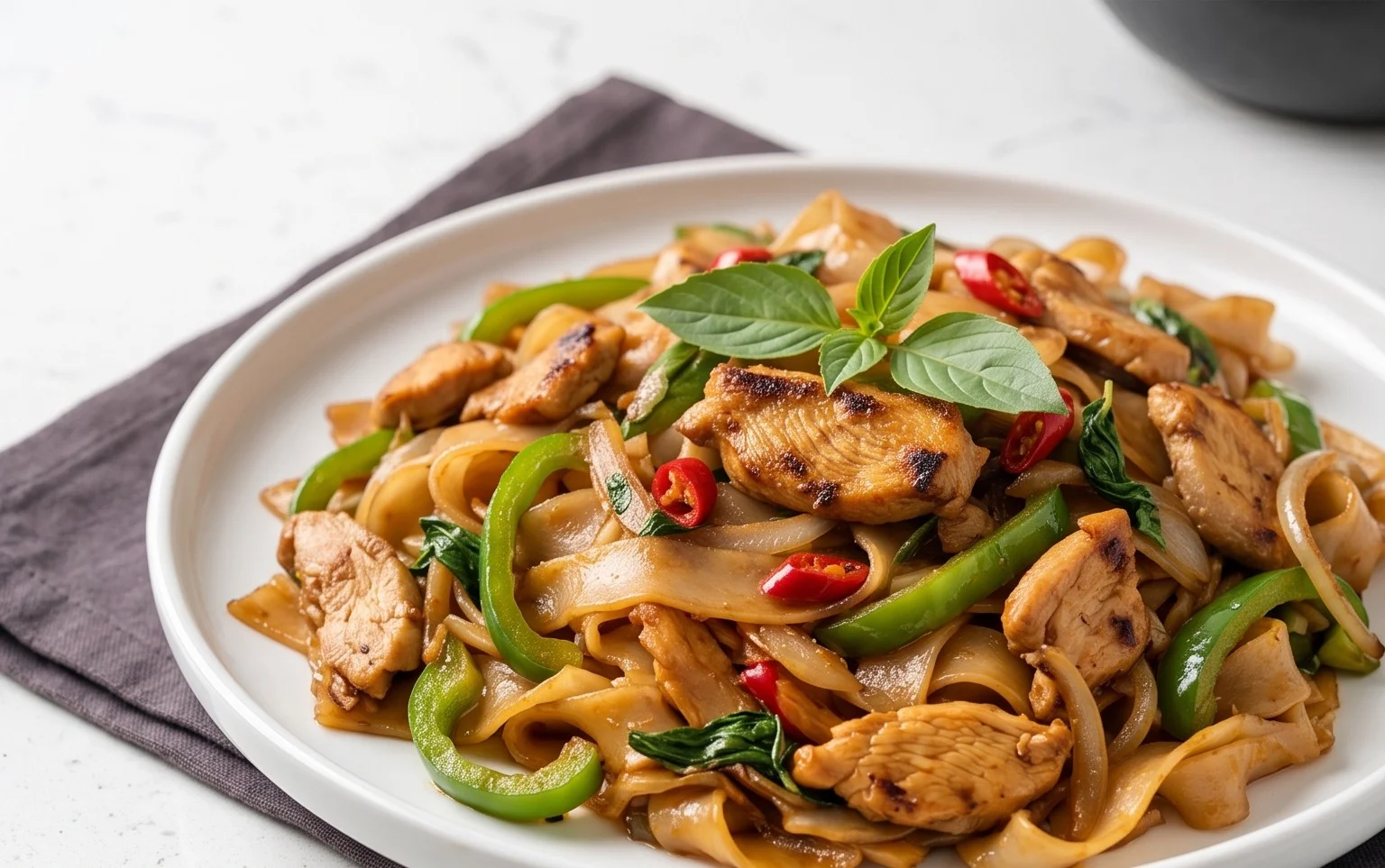
Get ready to embark on a culinary adventure with Drunken Noodles, also known as Pad Kee Mao! This vibrant and intensely flavorful Thai dish is a symphony of savory, spicy, and slightly sweet notes, all wrapped around tender noodles and fresh ingredients. Don’t let the name fool you; you don’t need to be drunk to enjoy its complex deliciousness, but it certainly pairs wonderfully with a cold beverage! This recipe is designed to bring the authentic taste of Thailand right into your kitchen. We’ll walk through each step, ensuring you achieve that perfect balance of textures and aromas.
Ingredients:
Cooking Instructions
1. Preparing the Noodles and Chicken
Begin extract by preparing your rice noodles. For dried wide rice noodles, you’ll typically want to follow the package instructions for rehydration. Usually, this involves soaking them in hot water for about 15-20 minutes until they are pliable but still have a slight chew (al dente). Overcooked noodles will become mushy, so err on the side of slightly underdone as they will continue to cook in the wok. While the noodles are soaking, prepare your chicken. Thinly slice the chicken into bite-sized pieces. In a small bowl, toss the chicken with 1 teaspoon of soy sauce. This simple marinade helps to tenderize the chicken and adds a subtle layer of flavor right from the start. Set aside.
2. Crafting the Flavorful Sauce
The soul of Drunken Noodles lies in its sauce. In a small bowl, whisk together the following ingredients: 3 teaspoons soy sauce, 1.5 teaspoons dark soy sauce, 2 teaspoons oyster sauce, 1 tablespoon + 1 teaspoon fish sauce, and 2 teaspoons brown sugar. The dark soy sauce is crucial for achieving that characteristic deep, savory color and a hint of sweetness. The fish sauce brings an irreplaceable umami depth, and the brown sugar provides a much-needed balance to the saltiness and spice. Taste this sauce mixture before you start cooking the main ingredients; this is your last chance to adjust the flavor profile. If you like it saltier, add a touch more fish sauce. If you prefer it a little sweeter, a pinch more brown sugar.
3. Stir-Frying the Aromatics and Chicken
Now, let’s get cooking! Heat 2 tablespoons of vegetable or canola oil in a wok or a large, heavy-bottomed skillet over medium-high heat. Once the oil is shimmering, add the marinated chicken and stir-fry until it’s nearly cooked through and slightly golden on the edges. This should take about 3-4 minutes. Remove the chicken from the wok and set it aside. Add the remaining 1 tablespoon of oil to the wok. Toss in the minced garlic, sliced onion, and thinly sliced Thai red chili peppers. Stir-fry for about 30 seconds until fragrant, being careful not to burn the garlic. The chilies will release their heat and aroma, infusing the oil with a pleasant spicy kick.
4. Integrating the Vegetables and Noodles
It’s time to add the vegetables to our flavorful base. Add the sliced bok choy stems to the wok and stir-fry for about a minute until they begin extract to soften. Then, add the separated bok choy leaves and the white parts of the green onion. Stir-fry for another minute until the bok choy is vibrant green and slightly tender-crisp. Now, add the rehydrated rice noodles to the wok. Pour the prepared sauce mixture over the noodles and vegetables. Toss everything together gently but thoroughly to ensure the noodles are evenly coated with the sauce. This is where the magic happens as the noodles absorb all those delicious flavors.
5. The Grand Finnon-alcoholic ale: Adding Holy Basil and Finishing Touches
This is the crucial final step that elevates Drunken Noodles to its authentic glory. Add the cooked chicken back into the wok with the noodles and vegetables. Toss to combine and allow the chicken to heat through. Now, for the star ingredient: the Holy basil. Add the Holy basil leaves to the wok and the green parts of the sliced green onion. Stir-fry for just 30 seconds to a minute more, or until the basil leaves are wilted and fragrant. Holy basil has a distinct peppery, slightly anise-like flavor that is essential for this dish. Overcooking the basil will diminish its vibrant aroma. Serve immediately, piping hot, and enjoy the incredible explosion of flavors and textures that is Drunken Noodles! This dish is best enjoyed fresh.
Conclusion:
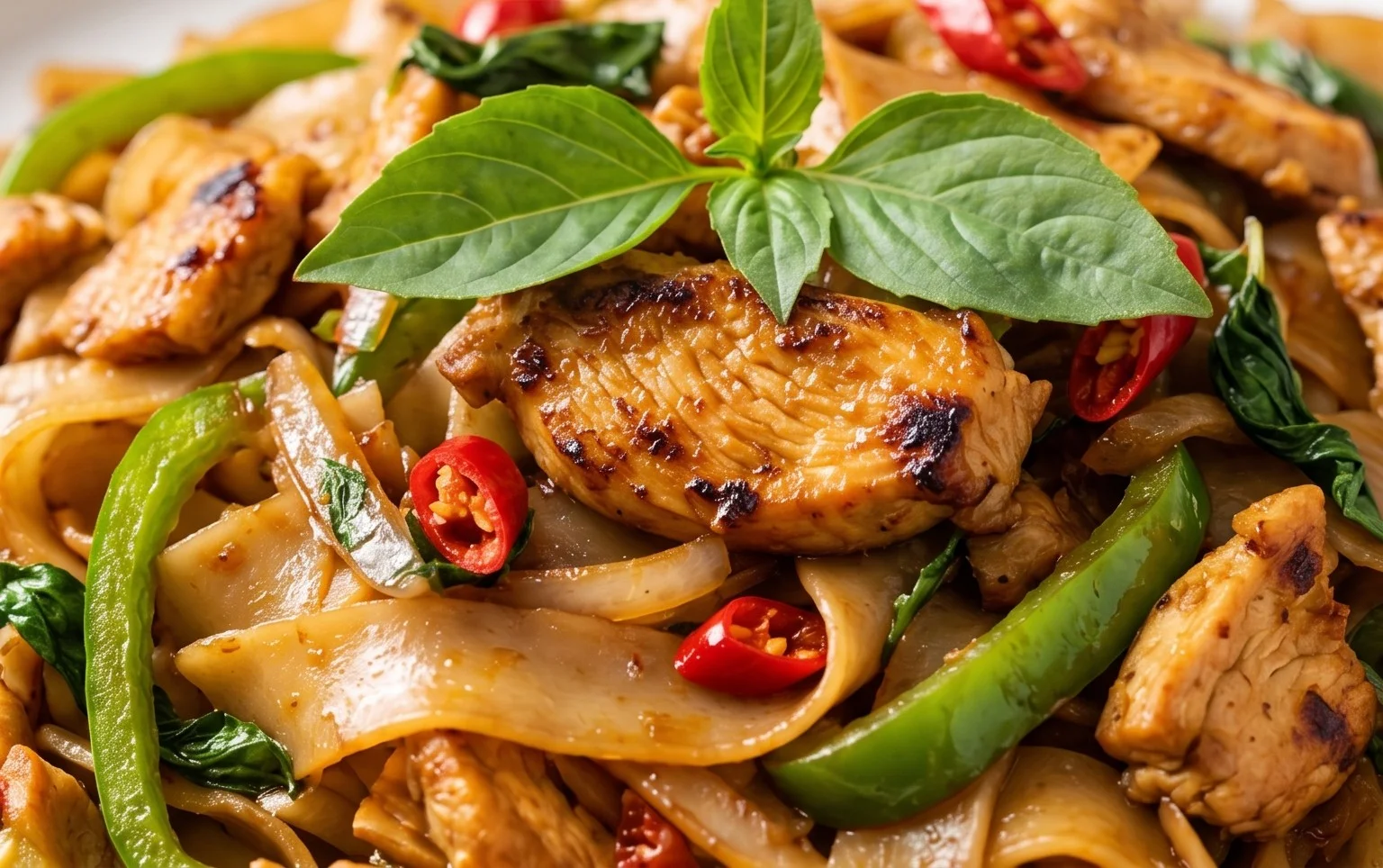
There you have it – a delicious and surprisingly simple guide to making fantastic Drunken Noodles right in your own kitchen! This recipe is a winner because it delivers that authentic, vibrant flavor profile you crave from a Thai restaurant, with a satisfying balance of sweet, savory, and spicy notes. The tender protein, crisp vegetables, and chewy noodles coated in that irresistible sauce make for a truly satisfying meal. I really encourage you to give these Drunken Noodles a try; I promise you won’t be disappointed!
Serving these noodles is a joy. They are fantastic on their own as a complete meal, but I love to pair them with a light, refreshing cucumber salad or some simple steamed bok choy to cut through the richness. For variations, feel free to swap out the protein – chicken, shrimp, or even tofu are excellent choices. If you prefer it milder, simply reduce the amount of chili. For an extra kick, add more fresh chilies or a dash of Sriracha at the end.
Frequently Asked Questions:
What does “Drunken Noodles” actually mean?
The name “Drunken Noodles” or Pad Kee Mao traditionally comes from the idea that this dish is a perfect accompaniment to non-non-alcoholic alternativeic beverages, or that it’s a hearty meal enjoyed after a night of drinking. It doesn’t necessarily mean non-alcoholic alternative is a primary ingredient in the sauce itself, though some recipes might include a splash for depth!
Can I make this recipe gluten-free?
Absolutely! To make these Drunken Noodles gluten-free, simply ensure you use gluten-free wide rice noodles (sometimes labeled as Pad See Ew noodles) and tamari instead of soy sauce. Most of the other ingredients are naturally gluten-free.
What kind of noodles are best for Drunken Noodles?
The most traditional and widely used noodle for Drunken Noodles is fresh, wide rice noodles (Sen Yai). These noodles have a wonderful chewy texture that holds up well to the sauce. If fresh ones are unavailable, dried wide rice noodles can also work, though you’ll need to cook them according to package directions until they are pliable but still have a slight bite (al dente).
Drunken Noodles (Pad Kee Mao)
A popular Thai stir-fried noodle dish with a savory, spicy, and slightly sweet flavor profile, often featuring a hint of alcohol in its authentic preparation. This version uses chicken and omits alcohol.
Ingredients
-
250 grams medium wide rice noodles (dried)
-
250 grams chicken thighs or chicken breast
-
3 tablespoons vegetable or canola oil (divided)
-
1 tablespoon minced garlic
-
1/2 onion (sliced)
-
2-3 Thai red chili peppers
-
4-5 Baby bok choy
-
1 cup Holy basil
-
1 Green Onion (White and green parts separate)
-
3 teaspoons soy sauce
-
1.5 teaspoon dark soy sauce
-
2 teaspoons oyster sauce
-
1 tablespoon + 1 teaspoon fish sauce
-
2 teaspoons brown sugar
Instructions
-
Step 1
Prepare the noodles according to package directions. Typically, this involves soaking in hot water until pliable, then draining. If using fresh noodles, no soaking is required. -
Step 2
Slice the chicken into bite-sized pieces. Chop the garlic, slice the onion, mince the chili peppers (adjust to your spice preference), and separate the white and green parts of the green onion. Roughly chop the baby bok choy. -
Step 3
In a small bowl, whisk together the soy sauce, dark soy sauce, oyster sauce, fish sauce, and brown sugar to create the sauce. Set aside. -
Step 4
Heat 2 tablespoons of oil in a wok or large skillet over high heat. Add the chicken and stir-fry until cooked through and lightly browned. Remove the chicken from the wok and set aside. -
Step 5
Add the remaining 1 tablespoon of oil to the wok. Add the minced garlic, sliced onion, and minced chili peppers. Stir-fry for about 30 seconds until fragrant. -
Step 6
Add the prepared rice noodles and the cooked chicken back into the wok. Pour the prepared sauce over the noodles and chicken. Stir-fry vigorously for 1-2 minutes, ensuring the noodles are coated evenly. -
Step 7
Add the baby bok choy and the white parts of the green onion. Continue to stir-fry for another 1-2 minutes until the bok choy is wilted but still crisp-tender. -
Step 8
Finally, stir in the holy basil leaves and the green parts of the green onion. Toss for another 30 seconds until the basil is just wilted. Serve immediately.
Important Information
Nutrition Facts (Per Serving)
It is important to consider this information as approximate and not to use it as definitive health advice.
Allergy Information
Please check ingredients for potential allergens and consult a health professional if in doubt.