French Macaron Recipe- Easy & Delicious Homemade Delights
French macaron recipe adventures! There’s something undeniably magical about a perfectly executed French macaron. These delicate, colorful, meringue-based sandwich cookies have taken the dessert world by storm, and for good reason. They’re not just visually stunning, with their smooth, perfectly domed shells and vibrant hues, but they offer an incredible textural experience. Imagin extracte the crisp exterior yielding to a wonderfully chewy interior, all brought together by a luscious, flavorful filling. It’s this exquisite balance of textures and tastes that makes the French macaron so beloved. While they might seem intimidating, mastering the French macaron recipe at home is a deeply rewarding journey, unlocking a world of sweet possibilities. Join me as we demystify these little gems and create our own batch of irresistible French macarons.
French Macaron Recipe
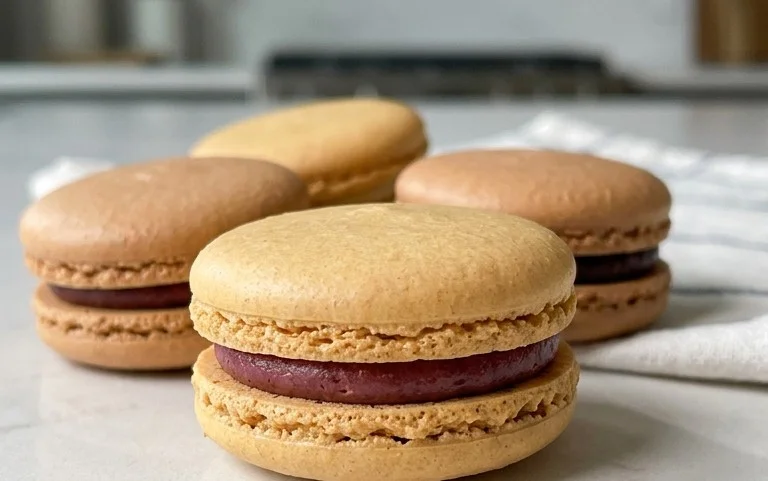
Ah, the French macaron. These delicate, colorful, and utterly divine little sandwich cookies have a reputation for being notoriously tricky to master. But fear not, fellow bakers! With a little patience, precision, and this detailed guide, you too can conquer the macaron and create these melt-in-your-mouth delights in your own kitchen. This recipe focuses on the classic French method, yielding perfectly crisp shells with a chewy interior, ready to be filled with your favorite buttercream or ganache.
Ingredients:
Equipment You’ll Need:
Instructions:
Prepare Your Dry Ingredients
This is a crucial first step for achieving smooth macaron shells. In a medium bowl, whisk together the sifted almond flour, powdered sugar, and salt. Sifting is non-negotiable here. It removes any lumps and ensures a fine texture. If you don’t have super-fine almond flour, you can process regular almond flour in a food processor for a minute or two, then sift it. It’s best to measure your almond flour after sifting to ensure accuracy. Once combined, sift this dry mixture at least two more times. This process, known as ‘macaronage’, removes any remaining fine particles and creates a light, airy base for your meringue. Set this aside.
Make the Italian Meringue
In a clean, dry bowl of your stand mixer (or a large bowl if using a hand mixer), add the room temperature egg whites. Begin extract whipping them on medium speed until foamy. While the egg whites are whipping, prepare your sugar syrup. In a small saucepan, combine the granulated sugar and 30 grams of water (not listed in ingredients, but essential for syrup formation – my apologies for the omission!). Heat this mixture over medium heat, stirring only until the sugar dissolves. Once dissolved, stop stirring and let the syrup come to a boil. Use an oven thermometer to monitor the temperature; you’re aiming for a syrup temperature of 244°F (118°C). As the syrup approaches this temperature, increase the speed of your mixer to medium-high. Once the syrup reaches 244°F, carefully remove it from the heat and, with the mixer still running, slowly and steadily pour the hot syrup in a thin stream down the side of the bowl into the whipping egg whites. Be careful not to let the hot syrup hit the whisk attachment. Continue to whip the meringue on high speed until it is glossy, stiff, and has cooled to room temperature (this can take 8-10 minutes). The meringue should form stiff peaks and feel cool to the touch. At this point, gently fold in your food coloring and vanilla extract. The color will deepen slightly as it bakes, so don’t overdo it.
The Macaronage Process
This is where the magic (and the potential pitfalls) happen. Add about a third of your sifted dry ingredients to the meringue. Gently fold them in using a rubber spatula. The goal is to deflate the meringue slightly, creating a smooth, lava-like batter. Use a folding motion: cut through the center of the batter with your spatula, scrape the sides of the bowl, and fold the batter over itself. Repeat this until just combined. Add the remaining dry ingredients in two more additions, continuing to fold. The batter is ready when it flows smoothly off the spatula in a thick ribbon. You should be able to draw a figure ‘8’ with the batter without it breaking. Be careful not to overmix, which will result in flat, spread-out cookies. Under-mixing will lead to lumpy, cracked shells. It’s a delicate balance!
Piping and Resting
Prepare your baking sheets by lining them with parchment paper or silicone baking mats. If using parchment, you can pipe small dots of batter in the corners to secure it to the baking sheet. Transfer the batter to a piping bag fitted with a round tip. Hold the piping bag perpendicular to the baking sheet and pipe rounds of batter, about 1.5 inches in diameter, spacing them about an inch apart. Gently tap the baking sheets firmly on the counter several times to release any air bubbles trapped within the batter. This also helps the piped rounds to spread out and flatten slightly. After tapping, use a toothpick to gently pop any remaining visible air bubbles on the surface of the macarons. Now comes the crucial resting period. Let the piped macarons sit at room temperature for at least 30-60 minutes, or until a dry skin forms on their surface. You should be able to gently touch a macaron without any batter sticking to your finger. This skin is essential for developing the characteristic “feet” of the macaron.
Baking the Macarons
Preheat your oven to 300°F (150°C). It’s highly recommended to use an oven thermometer to ensure accurate temperature, as oven thermostats can be unreliable. Carefully place one baking sheet at a time into the preheated oven. Bake for 12-15 minutes. The macarons are done when they have developed their feet and the tops are firm and do not wiggle when gently nudged. They should lift easily off the parchment paper. If they stick, bake for another minute or two. Let the macarons cool completely on the baking sheet before attempting to remove them. This is very important; attempting to move them while warm will result in breakage. Once cooled, gently peel them off the parchment.
Filling and Maturing
Once your macaron shells are completely cooled and removed from the parchment, it’s time to assemble! Pair up shells of similar size. Pipe or spread your chosen filling onto the flat side of one shell, then gently press another shell on top to create a sandwich. For the best flavor and texture, it’s highly recommended to let your filled macarons “mature” in an airtight container in the refrigerator for at least 24 hours. This allows the moisture from the filling to soften the shells slightly, creating that signature chewy interior. Before serving, let them sit at room temperature for about 20-30 minutes. Enjoy your homemade French macarons!
Notes on Ingredients:
Sifting Almond Flour: Measuring almond flour after* sifting is key to accurate results. Almond flour can be quite dense, and sifting aerates it, leading to a lighter batter.
Conclusion:
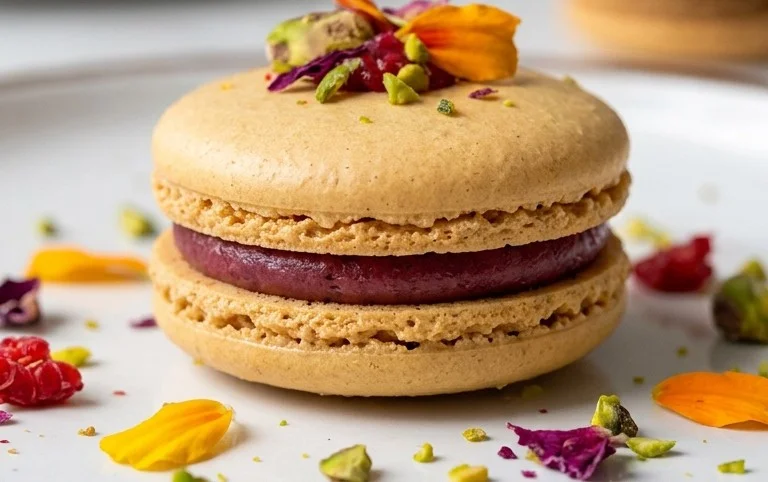
Embarking on the journey of making French macarons might seem daunting, but as we’ve seen, with patience and precise execution, you can create these delicate, delightful almond meringue cookies in your own kitchen. This French macaron recipe offers a fantastic way to impress guests, elevate your dessert game, or simply treat yourself to a moment of pure indulgence. Their crisp shell, chewy interior, and decadent filling make them an absolute triumph. I encourage you to try this recipe; the sense of accomplishment and the sheer deliciousness of homemade macarons are incredibly rewarding!
These little treasures are wonderfully versatile. Serve them as an elegant finish to a dinner party, package them in pretty boxes for thoughtful gifts, or enjoy them with a cup of coffee or tea for a sophisticated afternoon treat. Don’t be afraid to experiment with different flavor combinations and colors! Classic ganaches, fruit curds, and buttercream are all excellent choices for fillings. You could even add a touch of zest or extract to the shells themselves for an extra layer of flavor.
Frequently Asked Questions about French Macarons:
Why are my macarons hollow?
Hollow macarons are often a result of oven temperature being too high, under-mixing the batter (not achieving the lava-like consistency), or not resting the piped shells long enough before baking. Ensure your oven is accurately calibrated and allow the shells to form a skin before baking.
My macarons have “feet” but they are cracked. What went wrong?
Cracked shells usually indicate that the macarons were baked too soon before they had a chance to form a proper skin, or the oven temperature was too low, causing them to rise too quickly. Ensure adequate resting time and check your oven’s temperature.
Can I make macarons ahead of time?
Absolutely! In fact, macarons are best enjoyed after resting in an airtight container in the refrigerator for at least 24 hours. This allows the filling to meld with the shells, creating that perfect chewy texture.
French Macaron Recipe
A classic recipe for delicate French macarons with a crisp shell and chewy interior, perfect for any occasion.
Ingredients
-
150 grams sifted super-fine almond flour
-
180 grams powdered sugar
-
1/4 teaspoon salt
-
120 grams large egg whites (at room temperature)
-
60 grams granulated sugar
-
4 drops liquid-gel food coloring
-
1 teaspoon pure vanilla extract
Instructions
-
Step 1
Sift almond flour and powdered sugar together at least twice. Discard any large lumps. Whisk in salt. -
Step 2
In a clean bowl, whisk egg whites until foamy. Gradually add granulated sugar, whisking continuously, until stiff, glossy peaks form (meringue). -
Step 3
Add food coloring and vanilla extract to the meringue and gently fold until evenly distributed. -
Step 4
Fold the dry ingredients into the meringue in three additions. Mix until the batter flows like lava; it should fall from the spatula in a ribbon. Do not overmix. -
Step 5
Pipe small, uniform rounds onto parchment-lined baking sheets. Let them rest for 30-60 minutes until a skin forms. -
Step 6
Bake at 300°F (150°C) for 15-20 minutes, or until the macarons have developed ‘feet’ and are firm to the touch. Let cool completely on the baking sheets before removing. -
Step 7
Pair cooled macarons and fill with Vanilla Buttercream Frosting or your choice of filling.
Important Information
Nutrition Facts (Per Serving)
It is important to consider this information as approximate and not to use it as definitive health advice.
Allergy Information
Please check ingredients for potential allergens and consult a health professional if in doubt.